
Nitric Oxide Circulation Support Guide: Benefits, Ingredients & How to Choose
Nitric Oxide Circulation Support: Evidence-Based Guide (2026)
What most guides get wrong. Learn which ingredients actually work, common mistakes, and how to choose a supplement that delivers real results.
📋 In this article
If you’re looking for a practical, evidence-based way to support blood flow, this nitric oxide circulation support guide explains exactly what works — and what doesn’t.
Unlike generic supplement lists, this guide focuses on:
- ✔ Which ingredients actually improve circulation
- ✔ What most nitric oxide supplements get wrong
- ✔ How to choose a product that delivers real results
Nitric oxide plays a key role in relaxing blood vessels, improving oxygen delivery, and supporting cardiovascular function. However, not all supplements work the same way — and many fail due to poor formulation.
If you want a natural approach, you can also explore our detailed guide on how to increase nitric oxide naturally .
What Is Nitric Oxide Support and Why It Matters
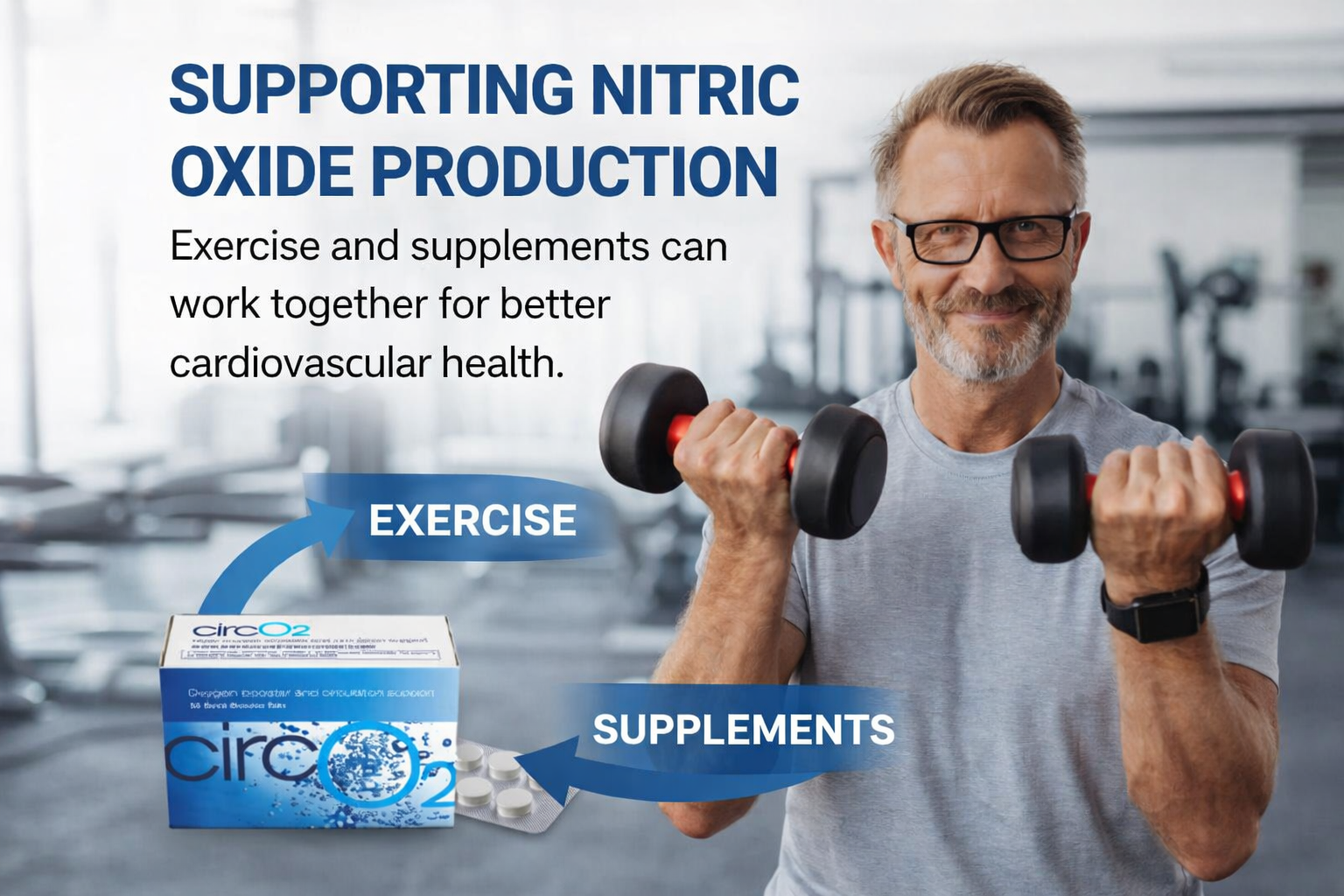
Regular physical activity is one of the best ways to support natural nitric oxide production, and supplements are often used alongside exercise.
Nitric oxide (NO) is a molecule produced naturally by the body. It signals blood vessels to relax, improving blood flow and oxygen delivery. Many people use nitric oxide supplements to help maintain healthy circulation, especially as they age.
For a broader look at wellness supplements, visit our Health Supplements section.
Common Mistakes When Choosing Nitric Oxide Supplements
Many people choose nitric oxide supplements based on marketing claims instead of actual effectiveness. Here are the most common mistakes:
- Choosing products with low-dose ingredients – Most formulas use ineffective “proprietary blends” with tiny amounts of active ingredients.
- Relying only on L-arginine instead of L-citrulline – L-arginine is poorly absorbed when taken orally. L-citrulline is far more effective.
- Ignoring nitrate-based pathways (like beetroot) – The nitrate pathway is completely separate from the arginine pathway. Effective supplements support both.
- Buying proprietary blends without transparency – If the label doesn’t show exact ingredient amounts, you’re probably overpaying for ineffective doses.
To better understand ingredient effectiveness, see our comparison: L-citrulline vs L-arginine .
How Nitric Oxide Circulation Support Affects Blood Flow
Understanding the two primary nitric oxide pathways helps explain why many supplements combine multiple ingredients. The goal is to support both routes for optimal results.
1. The L-Arginine Pathway
In this pathway, L-arginine is converted into nitric oxide. Some research suggests this pathway may become less efficient with age, which is why many products include L-citrulline as an alternative precursor. To understand why L-citrulline is often preferred, read our comparison: L-citrulline vs L-arginine – which is better for you?
2. The Nitrate Pathway for Nitric Oxide Support
This pathway begins with dietary nitrates from vegetables like beets and spinach. Many products use beetroot extract to target this route, a common approach in modern circulation formulas. You can also boost this pathway through diet — see our list of nitric oxide rich foods.
Key Ingredients for Healthy Circulation
When evaluating any product, pay attention to the specific forms and doses of these ingredients. Here are the most common ones found in circulation support formulas.
🍉 L-Citrulline for Nitric Oxide Support
An amino acid that converts to L-arginine. It is a cornerstone of many formulas because it provides sustained arginine levels for better nitric oxide production. Look for 3000-6000mg per serving.
🥬 Beetroot Extract for Circulation Support
A concentrated source of dietary nitrates. Beetroot is one of the most researched ingredients for supporting healthy circulation via the nitrate pathway. Look for 500-1000mg with standardized nitrate content.
🍒 Pomegranate Extract for Nitric Oxide Support
Rich in polyphenols that may help protect nitric oxide from breakdown, often included in comprehensive blends to prolong benefits.
🌿 Hawthorn Berry for Healthy Circulation
Used traditionally for cardiovascular support; sometimes appears in products for its mild vasodilatory properties that complement nitric oxide activity.
| Ingredient | Role in Circulation Support | Clinical Dose |
|---|---|---|
| L-Citrulline | Precursor to arginine (more effective than arginine) | 3000–6000 mg |
| Beetroot Extract | Dietary nitrate source (nitrate pathway) | 500–1000 mg |
| Pomegranate Extract | Antioxidant, NO preservation | 250–500 mg |
| Hawthorn Berry | Vasodilation support | 300–600 mg |
Looking for a more complete picture of circulatory health? Don’t miss our guide on best vitamins for circulation and heart health.
Benefits and Limitations of Nitric Oxide Circulation Support
Like any supplement category, these products have both potential upsides and important limitations. Here’s a balanced look.
✅ Potential Benefits
- May support healthy circulation and blood flow
- Common ingredients like beetroot and citrulline have been studied in exercise contexts
- Often uses food-derived or naturally sourced compounds
⚠️ Possible Limitations
- Effects vary by individual
- Not a replacement for medical treatment
- Product quality can vary widely
- Potential interactions with certain medications
Who May Benefit from These Supplements
While anyone can theoretically benefit, certain groups may find these supplements particularly relevant:
- Adults over 40 interested in maintaining healthy circulation.
- Active individuals looking for support with endurance and recovery.
- People with sedentary habits who want to support vascular health.
- Those focused on cardiovascular wellness who have discussed supplementation with their healthcare provider.
If you are curious about other wellness products, you may find our review of Neurozenix Focus or our guide to Natural Blood Sugar Support helpful. Also, see our curated list of best supplements for blood flow and circulation for additional options.
Safety and Potential Interactions
Nitric oxide supplements are generally well tolerated when used as directed. Some users may experience mild digestive discomfort, headache, or dizziness, especially when first starting.
Consult your doctor before using if you:
- Take medication for blood pressure or heart conditions
- Use nitrates or erectile dysfunction drugs
- Take blood thinners
- Have low blood pressure
- Are pregnant, nursing, or planning surgery
How to Use Nitric Oxide Supplements
For general wellness: follow the manufacturer’s instructions. Consistency over several weeks is key for any supplement regimen targeting healthy circulation.
For exercise support: some ingredients like L-citrulline and beetroot extract are often taken 30–60 minutes before a workout to maximize blood flow benefits.
How to Choose the Best Nitric Oxide Circulation Support Supplement
Choosing the right nitric oxide supplement can significantly impact your results. Focus on these key factors:
- Clinical dosages: L-citrulline should be at least 3000 mg per serving. Avoid products with hidden proprietary blends.
- Dual pathway support: Include both L-citrulline (arginine pathway) and beetroot extract (nitrate pathway) for comprehensive support.
- No proprietary blends: Transparent labeling is essential. If you can’t see exact ingredient amounts, skip it.
- Third-party testing: Look for NSF, USP, or independent lab verification on the label or website.
- Minimal fillers: Avoid unnecessary additives, artificial colors, and preservatives.
For a broader comparison of options, visit our full guide: best supplements for blood flow and circulation .
Frequently Asked Questions
❓ How long does it take to see results from nitric oxide supplements?
Some individuals may notice subtle changes in energy or circulation within 1 to 2 weeks of consistent use. More significant effects may take 3 to 4 weeks.
❓ Are there any medication interactions with nitric oxide supplements?
Yes. If you take blood pressure medication, nitrates, erectile dysfunction drugs, or blood thinners, consult your healthcare provider before starting any nitric oxide supplement.
❓ What foods naturally support nitric oxide production?
Foods rich in nitrates, such as beets, spinach, arugula, and celery, can help support the body’s nitric oxide pathways. For a complete list, see our article on nitric oxide foods.
❓ What is the difference between L-arginine and L-citrulline?
L-citrulline is often preferred because it converts to arginine more efficiently, leading to sustained levels and fewer digestive side effects. Learn more in our detailed comparison: L-citrulline vs L-arginine.
📚 Selected Scientific References
- Jones, A.M. (2014). Dietary nitrate supplementation and exercise performance. Sports Medicine. PubMed
- Schwedhelm, E., et al. (2008). Pharmacokinetic and pharmacodynamic properties of oral L-citrulline and L-arginine. British Journal of Clinical Pharmacology. PubMed
- Siervo, M., et al. (2013). Inorganic nitrate and beetroot juice supplementation reduces blood pressure in adults. Journal of Nutrition. PubMed
- Mayo Clinic. (2025). Dietary supplements for heart health. Read on Mayo Clinic
📖 Related Articles on Supzera
If you are interested in learning more about a specific product that uses the ingredients discussed in this guide, you can visit the official website below.
Visit Official Website(Affiliate link)